
Sauna Room Buyer Basics: Types, Materials, Power & Project Fit
Primary keyword: Sauna room | Buyer stage: Awareness → Research | Reading time: 10–12 min
A sauna room is a heat therapy enclosure used in residential and commercial wellness settings. It is built to deliver controlled heat through either traditional sauna heaters or far infrared heating panels, with wood construction, tempered glass, lighting, and controls as core elements. This article explains what buyers should understand before selecting a sauna room, from installation type and heating method to material, power, smart features, and the product categories offered by manufacturer OCEAN FUTURE.
What Is a Sauna Room?
A sauna room is a defined indoor or outdoor space designed for therapeutic sweating and relaxation. It can be installed in a private home, backyard, hotel, guesthouse, wellness club, or spa facility, and is typically built to tolerate high temperature, moisture, and changing climate conditions.
Across the industry, sauna rooms serve functions such as therapeutic sweating, muscle relaxation, improved blood circulation, stress relief, and temperature therapy. They are used by individuals in residential settings and by operators in hospitality projects where guests expect a relaxing, safe heat experience.
The global sauna market was valued at USD 954.3 million in 2025 and is projected to reach USD 1,556.8 million by 2033. This growth reflects rising interest in home wellness and commercial spa facilities. For first-time buyers, knowing the basic product landscape is the first step to making a confident purchase.
What Is Driving the Demand for Sauna Rooms?
Demand for saunas is coming from both homeowners and commercial operators.
In 2025, the residential segment dominated the sauna market, accounting for approximately 58.92% of the global share. Homeowners are adding saunas to bathrooms, basements, and backyards as part of broader wellness routines. Installations in private residences often prioritize compact size, ease of control, and lower power consumption.
The commercial segment remains steady. Hotels, guesthouses, leisure facilities, wellness clubs, and boutique guesthouses use saunas as an amenity that differentiates their spaces. Commercial buyers tend to prioritize durability, capacity, consistent heating, and low-maintenance materials.
From a geographic standpoint, sauna applications are common in Australia, Canada, China, Germany, Spain, France, Mexico, and the United States. European and North American markets are the most frequent destinations for both residential and commercial sauna installations.
Main Categories of Sauna Rooms
1. Indoor vs. Outdoor Sauna Rooms
The most basic distinction is installation location.
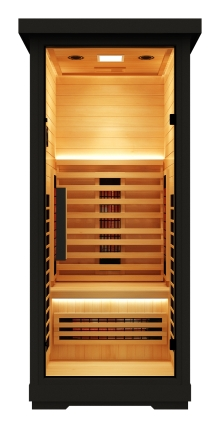
Indoor sauna rooms are built for installation inside a residence, hotel, or wellness facility. They are usually more compact and can be installed against an existing wall or corner. Many indoor models are far infrared units that require no chimney and can run on standard residential electricity.
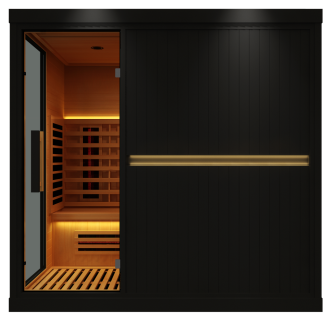
Outdoor weatherproof sauna rooms are designed for backyards, gardens, hotel courtyards, and resort environments. Because they are exposed to sun, rain, and cold temperatures, they need a roof system, weather-resistant exterior finishing, and durable insulation. OCEAN FUTURE series models such as OFS06C-1, OFS06C-2, OFS06C-3-2 and OFS06C-4 are outdoor sauna rooms featuring a pentroof, tempered glass, and a wood handle.
An outdoor sauna adds a strong leisure element to a home or commercial site, but it requires more space and structural planning. An indoor unit is easier to integrate into existing architecture.
2. Infrared vs. Traditional Finnish Sauna Rooms
Sauna rooms are also classified by heating method.
Infrared sauna rooms use far infrared heating plates or boxes that warm the body directly. They typically operate at lower air temperature than traditional saunas, heat up more quickly, and often use less power. They are popular for residential and compact commercial projects because they can plug into standard electrical connections. Many OCEAN FUTURE models, including OFS01-1, OFS02-2, OFS03-2, OFS06A-5, and OFS06B-4, are far infrared indoor or outdoor saunas.
Traditional Finnish sauna rooms use a sauna stove—often a wood-fired or electric heater such as a Harvia stove—to heat the air and sauna stones. Water can be poured on stones to create steam and raise humidity. These saunas generally require higher power and may need ventilation. OCEAN FUTURE model OFS12-2, for example, is an indoor sauna room that includes a Harvia stove 6kW (BC60E) and total power of 6000W.
Hybrid infrared and traditional sauna rooms combine both systems. A hybrid unit can deliver the gentler infrared experience as well as a traditional hot-air heat experience, giving users more flexibility. OCEAN FUTURE model OFS07-2 is an indoor sauna room with a far infrared heating box and a Harvia stove 6kW (BC60E), with a combined total power of 8000W + 800W.
Industry data shows that traditional saunas held the largest product share in 2025 at approximately 42.79%, but infrared saunas are growing faster, with a projected 7.5% CAGR. For the buyer, the choice should reflect the installation site, user preferences, and energy budget.
3. Residential vs. Commercial Sauna Rooms
Some buyers need one sauna for a private home; others are procuring for hotels, resorts, or spa facilities.
Residential home sauna rooms are sized for personal or family use, fit into smaller footprints, and keep power requirements manageable. OCEAN FUTURE produces compact indoor infrared models such as OFS01-1 (1800W total power), OFS02-1 (1700W total power), and OFS08-1, a smart indoor sauna room with WiFi and Bluetooth connectivity and a rated voltage of 220V/50Hz.
Commercial sauna rooms and hotel spa steam sauna rooms serve guesthouses, wellness clubs, commercial clubs, and hotel & hospitality facilities. They are built to withstand more frequent use. A commercial installation may choose a high-power traditional model with a Harvia stove or weatherproof outdoor units for a club or resort. OCEAN FUTURE application scenarios include residential home saunas, hotel sauna rooms, guesthouse leisure facilities, private backyard saunas, and club wellness projects.
Materials and Construction
Common Wood Types
Wood is the dominant structural and interior material for sauna rooms. The most common OCEAN FUTURE material combination is hemlock, aspen, and red cedar. These woods are selected for resistance to moisture, stability under repeated heating and cooling, and visual warmth. Canadian red cedar is prized for its aromatic, low-density, weather-resistant properties, although exact grade depends on supplier and project specification.
Other market terms include hemlock wood sauna rooms, eco-friendly wood sauna cabins, and FSC-certified wood sauna rooms. FSC certification relates to responsible sourcing; European commercial developers are increasingly prioritizing FSC-certified sustainably sourced wood in new sauna installations. Buyers should ask suppliers whether the wood is available with FSC certification for their projects.
Tempered glass and surface treatment
A safe sauna room uses tempered glass for doors or walls to reduce breakage risk under heat and humidity. Many OCEAN FUTURE models include tempered glass and a wood handle. Some models have a painted exterior surface; some use natural wood finish. For outdoor models, the pentroof (sloping roof) protects the room from sun and rain.
Heating, Power, and Smart Features
Heating systems and power ratings
Sauna room buyers should always check the heating element and total power. OCEAN FUTURE uses two main control systems: AV1 and MXD2022, with far infrared heating plates or boxes and, on traditional/hybrid models, Harvia stoves.
Across the OCEAN FUTURE sauna room line, total power ranges approximately from 1500W to 4150W for infrared models, while stove-based and hybrid models can reach 6000W to 8000W depending on heater configuration. Popular infrared models include:
- OFS06A-5: 3000W
- OFS06B-4: 2300W or 3850W depending on source
- OFS06C-1: 1800W
- OFS06C-2: 2150W
- OFS06C-4: 2300W
- OFS02-1: 1700W
- OFS02-2: 2050W
Stove-based/hybrid models include:
- OFS12-2: Harvia 6kW stove (BC60E), 6000W, MXD2022, indoor
- OFS07-2: far infrared heating box + Harvia stove 6kW (BC60E), 8000W+800W, indoor
- OFS05-3: Harvia stove 8kW (BC80E), 8000W, MXD2022, indoor
Rated voltage for smaller indoor smart units can be 220V/50Hz; larger stove units can require 380V/50Hz. A buyer should confirm available site voltage before specifying equipment.
Entertainment, lighting, and control
Modern sauna rooms are no longer just a plain wooden box. Most OCEAN FUTURE sauna rooms include:
- FM radio, Bluetooth, USB, and in some cases WiFi connectivity
- Two speakers or a speaker for audio
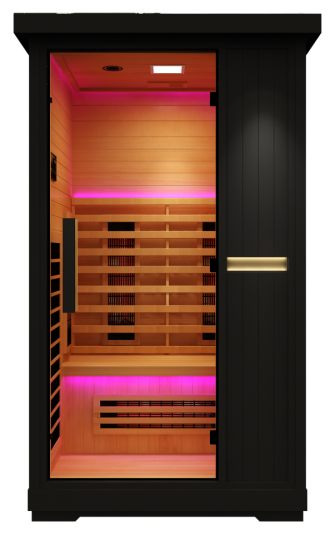
- Colorful lighting, 4000K lamp, colorful lamp under seat, or light belts on backrest and ceiling
Smart sauna room options such as OFS08-1 add WiFi and Bluetooth connectivity. A smart sauna can allow users to control temperature, timing, lighting, or music from a mobile device, an appealing feature for residential buyers who want convenience. For a commercial operator, WiFi-enabled models can simplify guest control.
Accessories vary by model. Traditional-style units may include a wooden bucket, spoon, sandglass, hygrothermograph, sauna stones, and a wooden stove frame.
How to Choose: A Step-by-Step Guide for Buyers
Step 1: Clarify the project type
Ask what the sauna room will serve: a residential home sauna, a hotel sauna room, a wellness club, a bed-and-breakfast leisure facility, or a private backyard installation. The answer will drive size, material grade, power, and durability requirements.
Step 2: Choose indoor or outdoor
An indoor sauna room fits inside an existing building. An outdoor sauna cabin must survive weather exposure and should come with proper roofline, weatherproofing, and stable wood. If the site is a private backyard or resort courtyard, outdoor is appropriate.
Step 3: Choose the heating method
For quick warm-up and lower power, choose a far infrared sauna room. For a more traditional high-temperature experience with steam, choose a traditional Finnish sauna room with a stove. For maximum guest flexibility, consider a hybrid.
Step 4: Check wood and certifications
Match the material to climate and aesthetics: Canadian red cedar, hemlock, or aspen. Ask about FSC-certified wood options if the project has sustainability goals. Also confirm whether the unit carries certifications relevant to the destination market.
Step 5: Select capacity and total power
Estimate the number of people using the sauna at the same time. More occupants require more bench space and higher heating capacity. Ensure your electrical system can handle the total power and voltage, whether 1500W for a compact infrared cabin or up to 8000W for a traditional stove unit with 380V/50Hz.
Step 6: Confirm smart features and user experience
If buyers are homeowners, smart sauna rooms with WiFi, Bluetooth, and app control add convenience. For hotels and spas, music and LED lighting can improve the guest experience, while intuitive control panels reduce staff training.
Step 7: Validate the supplier's track record
The manufacturer's background matters. OCEAN FUTURE is an export-oriented manufacturer in Foshan, China, whose production entity FOSHAN GAOMING MUHE JINGCHENG SANITARY WARE CO., LTD. operates a 50,000 m² facility with 200+ employees and exports about 85% of output to markets such as the USA, Australia, EU, and Germany. Its main products include sauna rooms, hot tubs, swim spas, and cold plunges. Understanding who makes the product—and how they handle quality—reduces sourcing risk.
Sauna Room Comparison: OFS Series Overview
| Model | Type | Heating | Total Power | Control | Typical Setting |
|---|---|---|---|---|---|
| OFS01-1 | Indoor infrared sauna room | Far infrared heating plate | 1800W | AV1 | Hotel, guesthouse, wellness club |
| OFS02-1 | Indoor infrared sauna room | Far infrared heating plate | 1700W | AV1 | Spa, wellness club, guesthouse |
| OFS03-2 | Indoor infrared sauna room | Far infrared heating plate | 2000W | MXD2022 | Wellness club, hotel |
| OFS06A-5 | Infrared sauna room | Far infrared heating plate | 3000W | AV1 | Hotel, hospitality, spa |
| OFS06B-4 | Infrared sauna room | Far infrared heating plate + box | 2300W / 3850W per source | AV1 | Hotel, guesthouse, wellness club |
| OFS06C-1 | Outdoor sauna room with pentroof | Far infrared heating plate + box | 1800W | AV1 | Hotel, wellness club, spa |
| OFS06C-2 | Outdoor sauna room with pentroof | Far infrared heating plate + box | 2150W | AV1 | Hotel, guesthouse, commercial club |
| OFS06C-4 | Outdoor sauna room with pentroof | Far infrared heating plate + box | 2300W (product table) / 4150W (press source) | AV1 | Hotel, hospitality, spa |
| OFS07-2 | Indoor hybrid infrared + traditional | Far infrared heating box + Harvia stove 6kW (BC60E) | 8000W + 800W | MXD2022 | Hotel, guesthouse, spa |
| OFS08-1 | Indoor smart sauna room | Far infrared | — | MXD2022 | Residential, hotel, spa |
| OFS12-2 | Indoor traditional sauna room | Harvia stove 6kW (BC60E) | 6000W | MXD2022 | Hotel, hospitality, spa |
Typical Use Cases and Installation Environments
Sauna rooms serve multiple project types:
Residential home
Popular choices: smaller infrared rooms such as OFS01-1, OFS02-1, or OFS08-1. These heat up quickly, do not require complex venting, and fit within a home electrical budget. A private backyard sauna is often outdoor and weatherproof, with sound and lighting features that turn a home garden into a leisure zone.
Hotel & guesthouse
These operators favor units that can handle repeated guest use. Indoor installations can use OFS03-2, OFS06A-5, OFS07-2, or OFS12-2. For outdoor hospitality settings, OFS06C-2 or OFS06C-4 provide pentroof protection and weather-appropriate construction.
Wellness club & spa
Spa facilities need equipment that feels premium yet durable. Infrared or hybrid units with ambient lighting, music, and smart controls help create a distinctive experience.
Because hotel and spa projects often attract international visitors, many OCEAN FUTURE units are specified for use in markets across Australia, Canada, China, Germany, Spain, France, Mexico, and the United States.
Safety, Standards, and Practical Advice
Humidity, heat, and electrical safety
Sauna rooms operate in high-temperature and moisture-rich environments. Buyers should specify heat-resistant, non-toxic materials, waterproof and moisture-proof construction, and overheat protection. Outdoor installations also need UV resistance and durable thermal insulation.
Compliance awareness
Industry standards are evolving. A notable example in the United States is the publication in June 2025 of the electric sauna heater safety standard UL 60335-2-53, which aligns US regulation with international standards and is set to replace the older UL 875. Buyers should verify the certification status of both the complete sauna room and its heater according to their destination market.
For European or sustainability-oriented projects, FSC-certified wood is increasingly requested. Buyers should ask whether the manufacturer can supply FSC-certified material or, at minimum, document the wood species used.
Cost and lead time expectations
Sauna room prices vary widely based on size, wood species, heating method, features, and certification. Custom-built luxury or commercial-grade units generally command higher budgets than compact infrared models. A buyer should ask for a specification sheet and a clear lead-time estimate before ordering. Since exact pricing depends on configuration, requesting a formal quote is the safest approach.
FAQ
1. What is a sauna room used for?
A sauna room is used for therapeutic sweating, muscle relaxation, improved blood circulation, stress relief, and temperature therapy. It can be installed in residential homes, hotels, guesthouses, wellness clubs, and commercial spa facilities, with both indoor and outdoor configurations available.
2. Is OCEAN FUTURE a manufacturer or just a trading company?
OCEAN FUTURE is an export-oriented manufacturer based in Foshan, Guangdong, China. Its production entity is FOSHAN GAOMING MUHE JINGCHENG SANITARY WARE CO., LTD., which operates a 50,000 m² factory with more than 200 employees and 9 R&D engineers, producing approximately 5,000 sets per year. Main products include sauna rooms, hot tubs, swim spas, and cold plunges.
3. What are the differences between indoor and outdoor sauna rooms?
Indoor sauna rooms are designed for installation inside buildings and are usually more compact. Outdoor sauna rooms are built to withstand sun, rain, and changing temperatures, and often include a pentroof, weather-resistant construction, and durable wood. An outdoor installation should be selected when placing the sauna in a backyard, garden, or resort courtyard.
4. What are the differences between infrared and traditional Finnish sauna rooms?
Infrared sauna rooms use far infrared heating plates or boxes to warm the body directly at lower air temperatures. Traditional Finnish sauna rooms use a stove, such as a Harvia heater, to heat air and stones, creating a hotter, more humid environment. Hybrid models combine both heating systems to offer users both experiences.
5. What materials are OCEAN FUTURE sauna rooms made of?
OCEAN FUTURE sauna rooms are commonly constructed from hemlock, aspen, and red cedar. Models also feature tempered glass, wood handles, and some painted exterior finishes. Buyers can request wood specifications when high-end grades such as Canadian red cedar are desired.
6. How should I shortlist a sauna room supplier or request more information?
Start the selection process by clarifying the project location, installation type, heating preference, material requirements, capacity, and target market certifications. After comparing these criteria across models and suppliers, the most practical next step is to request documentation or a specification-based quote. OCEAN FUTURE can be contacted by email at service1@oceanfuture.cn or by phone/WhatsApp at +86 15820624699, and the company brochure is available for download below.
Want a full product overview?
Download the OCEAN FUTURE SAUNA ROOM brochure to review models, features, and configurations:
Download OCEAN FUTURE Sauna Room PDF
Contact: Kinear · service1@oceanfuture.cn · +86 15820624699
Have Questions or Need More Details?
Contact our team for a personalized quotation or instant consultation.
Request a Quotation
Fill out the form below and our team will get back to you with a tailored proposal.
WhatsApp Direct Chat
Prefer to chat in real-time? Message us on WhatsApp for instant assistance & quick answers.
- Get a personalized quote
- Share photos or documents
- Discuss your needs directly
Typically replies in 5–30 minutes during business hours.