
Sauna Room Application Guide: Matching OCEAN FUTURE Models to Hotel, Spa & Wellness Projects
Sauna Room Application Guide: Matching OCEAN FUTURE Models to Hotel, Spa & Wellness Projects
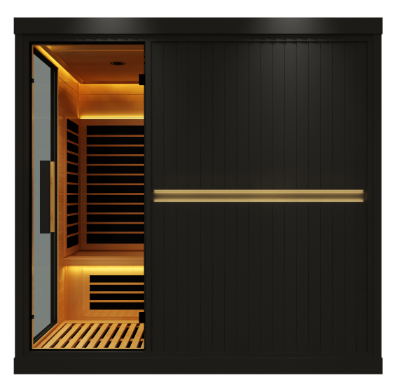
The right OFS06 model is decided by the project, not by the wattage alone. A guesthouse with a fixed electrical supply and a 40-room hotel with a dedicated wellness floor need different answers from the same sauna room family: OCEAN FUTURE infrared sauna rooms span a 1500W to 3850W power band, offer hemlock, aspen and Canadian red cedar cabins, use the AV1 control system, and include an entertainment package of FM radio, Bluetooth, USB and two speakers. This guide maps six OFS06 models to hotel, guesthouse, wellness club and spa scenarios, and shows which variables to settle before the electrical plan is fixed.
Problem Definition: Why Sauna Room Model Selection Fails at the Project Stage
Sauna room model selection fails when the specification is written from a catalogue page instead of from the installation. Two projects can share the same cabin footprint, the same budget and the same buyer, and still need different OFS06 variants, because the deciding constraints sit outside the product: available electrical load, humidity at the location, sessions per evening, and how much of the guest experience the operator wants the room to carry.
The four recurring failure modes in commercial sauna room projects look like this:
- Electrical mismatch. A unit chosen for heat-up speed and recovery between sessions is installed in a retrofitted room that shares a limited supply, so the room underperforms or the circuit is reworked after delivery.
- Environmental mismatch in wet zones. A spa places a sauna room next to pool or shower areas without confirming that the casing, sealing and hardware are specified for moisture and humidity exposure.
- Throughput mismatch. A hotel buys one model across an entire floor and finds that high-turnover rooms need more output than low-traffic ones, while low-traffic rooms are over-specified.
- Experience mismatch. Entertainment and control features are bought for a guesthouse where quiet is the selling point, or omitted from a commercial club where the guest-facing audio and control experience is part of the offer.
The rest of this guide works through these constraints in the order a project team should resolve them: scenario first, power class second, cabin and control third, commercial terms last.
Industry Background: What Commercial Sauna Room Buyers Are Entering
Commercial sauna room demand sits inside a mid-single-digit growth market, according to the public estimates available for this category. Technavio reports the US sauna market at USD 437.4 million in 2025, growing at a CAGR of 6.5% over 2026 to 2030. Market.us reports the global sauna market at USD 860.3 million in 2023, projected to reach USD 1,555.3 million by 2033 at a CAGR of 6.1%. Harvia Group estimates the global sauna market at close to EUR 4 billion in value, with roughly 18 million saunas installed worldwide.
Two compliance developments matter more to a hotel or spa buyer than market sizing. EN 18164, published in February 2026, is described in trade reporting as Europe's first pan-continental standard for public wellness climate rooms, and it covers the design and construction of sauna rooms, warm-air rooms, steam rooms and soft steam rooms in public facilities. In the United States, UL 60335-2-53, published in June 2025, addresses electric sauna heaters. Room construction and heater safety are therefore reviewed as separate compliance objects, and the electrical plan and the cabin specification should be checked separately.
On the supply side, OCEAN FUTURE is a sauna room, hot tub, swim spa and cold plunge manufacturer based in Foshan, Guangdong, China, exporting about 85% of its output to markets including the USA, Australia, the EU and Germany. The OFS06 infrared sauna room series is the part of that portfolio most often specified for hospitality and wellness work.
Detailed Solution: The Five Variables That Decide Which OFS06 Model Fits
1. Power output and circuit planning across a 1500W to 3850W band
Power output is the first filter because it is the least negotiable once a building is finished. Across the OFS06 range, models run from 1500W to 3850W, which means the family can serve a small retrofit room and a high-turnover commercial room without leaving the series. Two models anchor the ends of the practical decision:
- OFS06B-1 at 1850W sits in the low-draw part of the band. It is the model to examine when the installation point has limited spare capacity and the room will run a few sessions a day rather than a continuous evening schedule.
- OFS06A-5 at 3000W sits in the higher-output part of the band. It is the model to examine when a room needs to recover between guests several times in an evening, which is the normal pattern in hotel guest rooms and spa treatment suites.
The practical rule is to size by sessions per evening and recovery time between sessions, not by cabin footprint alone. A larger cabin used twice a day and a smaller cabin used eight times a day do not have the same requirement.
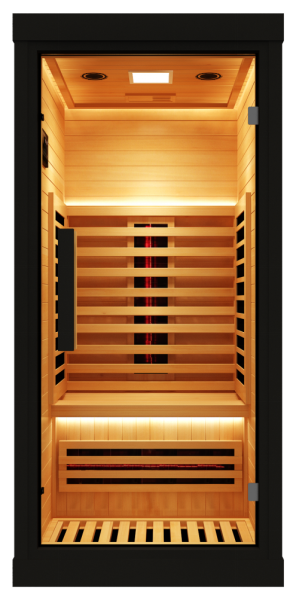
2. Wood construction: hemlock, aspen and Canadian red cedar
Cabin wood changes both the maintenance profile and the guest perception of the room. Canadian red cedar is the premium option: it is aromatic and rot-resistant, which matters where a sauna room sits near pool, shower or steam areas. Hemlock is a stable, neutral, budget-premium option with low scent, well suited to hotel rooms where fragrance should not compete with bedding or amenities. Aspen is the traditional Finnish choice, heat-resistant and positioned at the budget end, and it fits guesthouses and residential-style installations where cost discipline is the priority.
3. AV1 control system
The AV1 control system is the operating layer staff interact with. In a hotel or spa, the control decision is about who operates the room: housekeeping, front desk, a spa therapist or the guest. A single control layer that covers session operation and the entertainment functions reduces training load and reduces the number of support calls after handover. In a guesthouse, the same control system is simply a usability benefit for the owner.
4. Entertainment package: FM radio, Bluetooth, USB and two speakers
FM radio, Bluetooth, USB input and two speakers are guest-facing features, and their value is scenario-dependent. In a wellness or commercial club, where the session is part of a paid experience, the audio package carries part of the perceived value and belongs in the specification. In a spa treatment suite, it supports guided relaxation or therapist-led audio. In a small guesthouse, it is optional: the room is often sold on quiet, and the specification can stay simpler without weakening the offer.
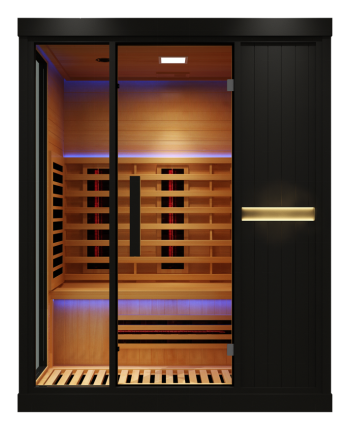
5. Moisture, heat and overheating protection
In commercial wellness buildings, heat and humidity are the two risks that shorten a sauna room's service life. The controls OCEAN FUTURE applies to this risk are an overheat protection function, an aluminum-plastic composite panel casing that resists water and UV exposure, and a sealed structure. These are paired with pre-delivery environmental safety testing, corrosion-resistant hardware and quality inspection before shipment. For a spa or hotel pool deck, that combination is the part of the specification worth confirming in writing, because it determines how the room behaves in the environment it is actually installed in, not in a showroom.

6. Cost of ownership compared with a custom-built sauna room
OCEAN FUTURE's comparison data for its modular sauna room platform records an initial cost about 10% lower than custom-built saunas, and total cost of ownership nearly 30% lower over five years. The same comparison records maintenance reduced to simple cleaning, assembly time reduced by 70%, and heating speed improved by 40% compared with traditional fixed sauna rooms and single-mode sauna cabins. These are company comparison figures rather than an independent benchmark, so they should be tested against the project's own freight, site works and commissioning costs before they are used in a budget paper.
Step-by-Step Breakdown: A Seven-Step Matching Process
- Define the duty cycle. Record expected sessions per evening, average session length, and the recovery gap the operator needs between guests. This single number decides more of the model choice than cabin size.
- Audit the electrical supply at the installation point. Confirm what the room can draw on its own circuit without reworking the panel. If the headroom is fixed and modest, the low-draw end of the band, represented by the OFS06B-1 at 1850W, is the starting point.
- Select the power class. Move up the band only when the duty cycle justifies it. A hotel guest room turned over several times an evening is the case for the OFS06A-5 at 3000W; a guesthouse running two or three sessions a day is not.
- Match the cabin wood to the environment. Canadian red cedar for premium positioning and wet-zone adjacency, hemlock for neutral hotel rooms, aspen where budget discipline leads.
- Fix the control and entertainment scope. Decide who operates the room and whether FM radio, Bluetooth, USB and two speakers belong in the guest offer. Specify AV1 control consistently across a multi-room floor so staff learn one interface.
- Confirm moisture and heat protection. Verify overheat protection, the aluminum-plastic composite panel casing, sealed structure, corrosion-resistant hardware and pre-delivery testing as written specification lines, especially for spa and pool-adjacent rooms.
- Validate with a sample and lock the schedule. OCEAN FUTURE states a minimum order quantity of 1 set and a lead time of 30 to 40 days. Validate one unit on site before a multi-room release, then build freight and commissioning time around the confirmed lead time.
Use Cases: Four Project Types and Their Model Logic
Hotel and hospitality projects
A hotel floor usually needs mixed power classes rather than one standard model. Guest rooms with nightly turnover justify the OFS06A-5 at 3000W because the room must recover between guests. Twin or shared wellness rooms are better served by pairing two units, using the OFS06B-3-1 and OFS06B-3-2 positions in the range, so a floor distributes connected load instead of concentrating it in one room. Specify hemlock for guest rooms where a neutral cabin is preferred.
Guesthouse and small hospitality
A guesthouse typically has one installation point, a fixed electrical supply and a low session count. The OFS06B-1 at 1850W is the natural fit here: it stays within the low-draw part of the band, keeps the electrical work minimal, and matches the actual usage pattern. Aspen or hemlock cabins keep the capital cost controlled, and the entertainment package can be simplified if the room is sold on quiet.
Wellness and commercial clubs
Commercial clubs sell the session as an experience, so the specification shifts toward guest-facing features. The OFS06B-4 position in the range is where the AV1 control system and the FM radio, Bluetooth, USB and two-speaker package carry the offer, and where Canadian red cedar supports a premium cabin impression. The OFS06B-2 position suits secondary rooms on the same site where a mid-band unit is sufficient.
Spa facilities
Spa installations add two constraints: wet-zone adjacency and treatment-suite acoustics. Here the priority is the sealed structure, the water and UV-resistant aluminum-plastic composite panel casing and the corrosion-resistant hardware rather than maximum output. Distribution matters too: two smaller units placed in separate treatment rooms often solve a load problem that one high-output room cannot, which is where the OFS06B-2 and OFS06B-3-2 positions are worth evaluating.
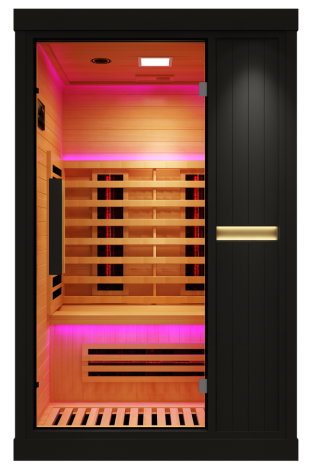
Comparison Table: Model-to-Scenario Matching
| Project scenario | Primary model | Power basis | Why it fits | Confirm before ordering |
|---|---|---|---|---|
| Hotel guest rooms, nightly turnover | OFS06A-5 | 3000W | Higher output supports back-to-back sessions and faster recovery between guests | Dedicated circuit headroom and the heater compliance route |
| Hotel twin or shared wellness rooms | OFS06B-3-1 / OFS06B-3-2 | Within the 1500W to 3850W band; confirm per model | Two units let a floor distribute connected load instead of concentrating it | Individual wattage on the current model spec sheet |
| Guesthouse and small hospitality retrofit | OFS06B-1 | 1850W | Low-draw end of the band, suited to installations with fixed electrical capacity | That the unit can run on the available circuit alone |
| Wellness and commercial club | OFS06B-4 | Within the band; confirm per model | Guest-facing position where AV1 control and the two-speaker audio package carry the experience | Audio scope and staff control handover |
| Spa treatment suites, wet-zone adjacency | OFS06B-2 | Within the band; confirm per model | Moisture protection and cabin sealing matter more than maximum output | Casing, sealing and overheat protection details |
| Multi-room commercial deployment | OFS06A-5 + OFS06B-1 mix | 3000W / 1850W | Mixing power classes matches output to actual room usage instead of standardising on one model | Total connected load, signed off with the electrical contractor |
Modular sauna room platform vs custom-built sauna room
| Comparison metric | OCEAN FUTURE modular sauna room approach | Custom-built sauna room |
|---|---|---|
| Initial cost | About 10% lower than custom-built saunas | Baseline |
| Total cost of ownership, 5 years | Nearly 30% lower | Baseline |
| Assembly time | Reduced by 70% compared with traditional fixed sauna rooms | Baseline |
| Heating speed | Improved by 40% compared with single-mode sauna cabins | Baseline |
| Maintenance | Reduced to simple cleaning | Baseline |
FAQ
Which standards should a hotel or spa sauna room project check before the model is confirmed?
Treat room compliance and heater compliance as two separate checks. For rooms in public facilities in Europe, EN 18164, published in February 2026, covers the design and construction of sauna rooms, warm-air rooms, steam rooms and soft steam rooms. For electric sauna heaters in the United States, UL 60335-2-53 was published in June 2025. Because these are different compliance objects, the cabin specification and the electrical plan should be reviewed separately. Ask for model-specific documentation rather than category-level statements: a secondary trade article references CE-EMC and EMC compliance testing for OCEAN FUTURE carried out by Guangzhou STU Hengchuang Testing Service Co., Ltd. against EN IEC 55014 and EN 61000 series standards, and any such reference should be matched to the exact model being ordered.
Can one sauna room series serve both a single guesthouse unit and a multi-room hotel wellness floor?
Yes, within the limits of the power band. The OFS06 range runs from 1500W to 3850W, so a guesthouse can be served by the OFS06B-1 at 1850W while a hotel guest room or spa suite is served by the OFS06A-5 at 3000W. The constraint is electrical and operational, not catalogue breadth: a floor with several rooms should be planned as a load mix rather than standardised on one model. OCEAN FUTURE operates a 50,000 m² factory with 200+ employees, a 9-engineer R&D team and an annual output of 5,000 sets, and exports about 85% of production.
How does the cost of a modular OFS06 sauna room compare with a custom-built sauna?
OCEAN FUTURE's comparison data records an initial cost about 10% lower than custom-built saunas and total cost of ownership nearly 30% lower over five years, with maintenance reduced to simple cleaning. The same comparison records assembly time reduced by 70% and heating speed improved by 40% against traditional fixed sauna rooms and single-mode sauna cabins. These are company comparison figures, so a project team should re-test them against local freight, site preparation and commissioning costs before using them in a capital plan.
Can a single unit be ordered to validate a model before a full project commitment?
OCEAN FUTURE states a minimum order quantity of 1 set, which allows one unit to be validated on site before a multi-room release. That is the practical way to confirm heat-up behaviour, control usability and cabin finish in the actual project environment rather than on a showroom floor. Sample and single-unit configurations can be arranged through OCEAN FUTURE's contact channels at service1@oceanfuture.cn or +86 15820624699.
What lead time and delivery planning should be built into the project schedule?
OCEAN FUTURE states a lead time of 30 to 40 days and a minimum order quantity of 1 set, against an annual output of 5,000 sets. In practice, the project schedule should combine that production window with freight, customs clearance, site preparation and commissioning, and should sequence any sample unit ahead of a full floor release. Requesting the production slot and the electrical specification together avoids the common situation where rooms arrive before the installation point is ready.
Conclusion: Decide the Scenario First, Then the Model
Model matching in commercial sauna room projects is a sequence, not a selection. The scenario fixes the duty cycle, the duty cycle fixes the power class, the environment fixes the cabin specification and the moisture protection scope, and the operator profile fixes whether the AV1 control system and the entertainment package belong in the budget. Applied in that order, the OFS06 range resolves cleanly: the OFS06B-1 at 1850W for guesthouse retrofits and low-load rooms, the OFS06A-5 at 3000W for hotel guest rooms and spa suites with real turnover, and the OFS06B-2, OFS06B-3-1, OFS06B-3-2 and OFS06B-4 positions evaluated against the same gates for twin rooms, wet-zone spа suites and guest-facing club environments.
Next step: match the model to your project
Share the project type, the available electrical capacity and the expected sessions per day, and OCEAN FUTURE will map the correct OFS06 configuration, cabin wood and control scope for the installation. Single-unit samples can be arranged against the stated minimum order quantity of 1 set.
Brochure (PDF): OCEAN FUTURE Sauna Room Catalogue
Infrared sauna room range: oceanfuturespas.com/sauna-room/infrared-sauna-room
Sauna room category: oceanfuturespas.com/sauna-room
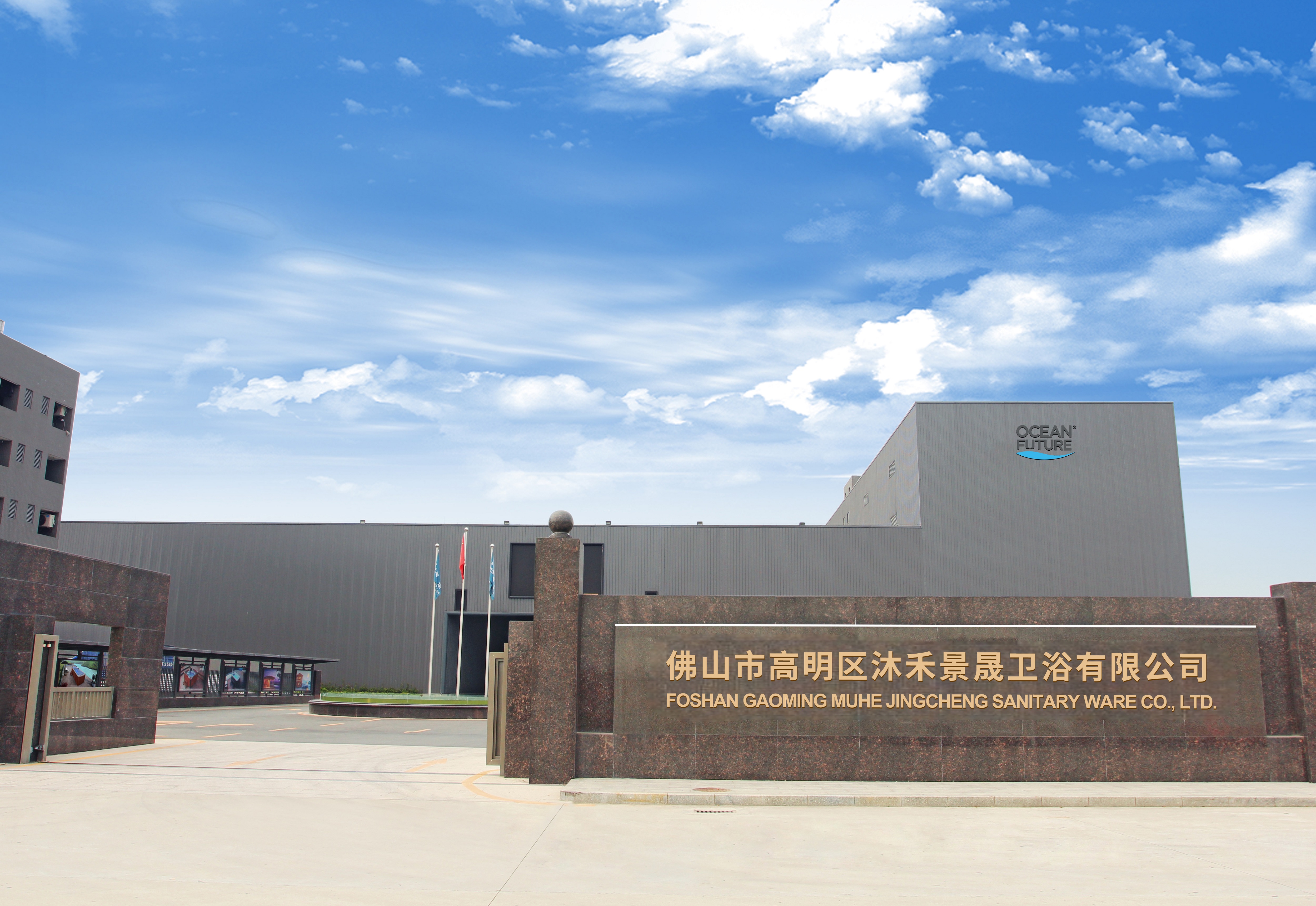
OCEAN FUTURE (FOSHAN GAOMING MUHE JINGCHENG SANITARY WARE CO., LTD.), founded 2023, operates a 50,000 m² factory with 200+ employees and an annual output of 5,000 sets.
Email: service1@oceanfuture.cn | Tel / WhatsApp: +86 15820624699
Address: NO.568, YANGXI ROAD, YANGHE TOWN, GAOMING, FOSHAN, GUANGDONG, CHINA
Have Questions or Need More Details?
Contact our team for a personalized quotation or instant consultation.
Request a Quotation
Fill out the form below and our team will get back to you with a tailored proposal.
WhatsApp Direct Chat
Prefer to chat in real-time? Message us on WhatsApp for instant assistance & quick answers.
- Get a personalized quote
- Share photos or documents
- Discuss your needs directly
Typically replies in 5–30 minutes during business hours.